For a full quality version on YouTube copy this URL:
http://www.youtube.com/watch?v=hbtGjhhRm_I
Showing posts with label Luke Butcher. Show all posts
Showing posts with label Luke Butcher. Show all posts
Thursday, 1 April 2010

Thursday, 11 March 2010
rough cut evaluation
This is what people thought about our rough cut of the sequence.
pro's and con's
Effective beginning as there is no visuals, so you can concentrate on the phone conversation. New scene is realistic.
Shots are very long and close viewers attention
voice overs last to long
credits are very effective
black screen draws attention to conversation
logo is very good
production logo slightly unprofessional
but a good length
mystery with political theme
interesting narrative
costumes are good
location fantastic
characters dont have enough characteristics
we learnt that our opening sequence needs improving.
We also learnt that we have the upperhand on other groups, ours is quite blatently better.
pro's and con's
Effective beginning as there is no visuals, so you can concentrate on the phone conversation. New scene is realistic.
Shots are very long and close viewers attention
voice overs last to long
credits are very effective
black screen draws attention to conversation
logo is very good
production logo slightly unprofessional
but a good length
mystery with political theme
interesting narrative
costumes are good
location fantastic
characters dont have enough characteristics
we learnt that our opening sequence needs improving.
We also learnt that we have the upperhand on other groups, ours is quite blatently better.
Wednesday, 10 March 2010
Rough Cut
Hello! While i am writing this up luke and oli and putting the final touches into our roughcut due in... half an hour. Our rough cut is our title sequence in order on final cut, it will be good to view online. Once the rough cut has been uploaded we have a number of things left to do. So far our project contains the completely edited phone call, completely edited news report and completely edited 'shifty man' scene. this makes a good foundation for our project and a quality rough cut as this is our filming complete. We do however have things left to do. We have to place our collage in between the phone conversation and filming, we have left this out of our rough cut because we have not as yet gathered all the relevant media ie news reports and pictures of crime scene. Once we have put these in place we will do a final edit of everything to make sure everything is perfect and then make the music. The gaps in the rough cut is where the other media will be placed. Thanks for your time.
Thursday, 4 March 2010
Editing the news report.
From our footage of the news report, we decided to make it looks official and as realistic as possible. For example adding text: the reporters name, and logos of the news company in this case, BBC news.
I researched into existing news reports, and identified what key features they all have. Focusing on BBC reports, they all have the traditional logo and have the reporters name and position. Also they normally have a "live" sign at the top, followed by the name of where the reporter is. And also how the name of the reporter fades out too.
I researched into existing news reports, and identified what key features they all have. Focusing on BBC reports, they all have the traditional logo and have the reporters name and position. Also they normally have a "live" sign at the top, followed by the name of where the reporter is. And also how the name of the reporter fades out too.
Monday, 1 March 2010
Filming Weekend


The weekend commencing 29th February 2010 was our filming weekend. We designated the Sunday to film as we had only little filming to do. We could fit this filming into one day because we had made detailed plans beforehand (see past blog posts). We knew what we were filming, the script, who played each role, costume, sound and how long each scene would take.
We had planned to film outside the 'Mitre Pub' in Cambridge because it is a bustling landmark in the center in the city, however when we arrived we realised that the people eating inside would make void the claim that this was a crime scene. Therefore we decided to go film at the 'University Arms Hotel' just by the Grand Arcade in town. This location fitted perfectly with the idea that there had been an assassination and it was a crime scene as we filmed in a desolate car park... implying that the public had been cleared from the area.
The first scene we filmed was the news report. Oliver Theunissen took up the role of the news reporter as he had apt clothes on. Instead of wearing a suit he wore a dark smart coat and a jumper with a collared shirt. He also wore black jeans so that it appeared he was wearing dark trousers. We had prepared a script before hand lasting around 60 seconds, which worked perfectly as it lasted indeed around 60 seconds. The actual filming on the other hand took around 22 mintues. This consisted of Oli replaying his script in about 20 different takes. Nevertheless, we got the scene down before the battery went dead and the prolonged filming actually meant we ended up with a perfect cut. There were mistakes, but the reporter had just arrived at the scene and had little time to prepare the actual report. We placed the camera mid shot so that we could see above waist. The frame of the shot was also perfect, we had the window of the lobby on Oli's left hand side and the name 'University Arms' on the right hand side.
The second scene was of me, Callum leaving the hotel door. In this clip we wanted to imply that this character had maybe played a part in the crime. We wanted the character to wear casual clothes, something that someone would wear everyday, but also something concealing. Therefore I chose to wear an outfit I normally would wear for college but include a big coat with a hood, something that would almost hide my identity while at the same time giving away key characteristics of myself. Luke made a close up to mid shot possible by walking with me as I walk out the hotel door and put my hood up. He films me walking away. We bring in a match on action shot by Luke moving to facing me walking from the door of the hotel and then away down the street.
Monday, 22 February 2010
What is a Call Sheet?
What is a call sheet?
A call sheet is chart issued to the cast and crew of a theatrical or film production, listing the production schedule.
What is included?
Typically, in addition to including a schedule, the call sheet also includes a list of contact information for other members of the cast and crew. Call sheets are often issued at the beginning of the week, because schedules change frequently, and trying to plan further ahead can become quite complicated. As a general rule, when a call sheet is assembled, the scheduler assumes that everyone is available at any time, unless specifically informed otherwise.
We decided to make a call sheet for our production, as it will remind us of the details of making the clip.
A call sheet is chart issued to the cast and crew of a theatrical or film production, listing the production schedule.
What is included?
Typically, in addition to including a schedule, the call sheet also includes a list of contact information for other members of the cast and crew. Call sheets are often issued at the beginning of the week, because schedules change frequently, and trying to plan further ahead can become quite complicated. As a general rule, when a call sheet is assembled, the scheduler assumes that everyone is available at any time, unless specifically informed otherwise.
We decided to make a call sheet for our production, as it will remind us of the details of making the clip.
Thursday, 11 February 2010
how the phone conversation went
We decided to separate the background noise after a preliminary practice of the phone conversation. We found that as there was similar background noise in both voice selections, it could make the audience think the characters are meeting, not in a phone conversation.
Character X - based in the refectory to make it appear as if he was in a cafe.
Character Y - based in the library where it is much quieter.
We did this in these settings because: character Y is much higher up in the group so he sounds in authority, however, character X is less in authority therefore, showing that Y is the boss over X.
To make the conversation sound like its a phone call we added a 3-band equalizer, making the frequency high and the Gain low, this made it appear more muffled, sounding like a phone. The other thing we are adding to make it sound more like a phone conversation is a dial tone or drone, which will aid the viewer to know thy are in separate places.
Update.
We found that having separate background noise can make it have little continuity.
The 3-band equalizer muffles the background noise a lot, however, we may have to refilm the section to improve the audio.
Character X - based in the refectory to make it appear as if he was in a cafe.
Character Y - based in the library where it is much quieter.
We did this in these settings because: character Y is much higher up in the group so he sounds in authority, however, character X is less in authority therefore, showing that Y is the boss over X.
To make the conversation sound like its a phone call we added a 3-band equalizer, making the frequency high and the Gain low, this made it appear more muffled, sounding like a phone. The other thing we are adding to make it sound more like a phone conversation is a dial tone or drone, which will aid the viewer to know thy are in separate places.
Update.
We found that having separate background noise can make it have little continuity.
The 3-band equalizer muffles the background noise a lot, however, we may have to refilm the section to improve the audio.
Wednesday, 10 February 2010
Target Audience
Our target audience for our thriller is both male and females aged between 15 - 30. We have chosen to utilise this target audience because we believe they are the most interested age group in thrillers. There is no way that our thriller can have a younger target audience for two reasons: 1. The storyline will be difficult to follow for anyone younger than 15 because it is a crime thriller. The complexity of the storyline will also keep people of 25+ interested and not bore them.
 The 15 rating is only used for films shown in cinemas. It is given to films that are best suited to those aged 15 or older.
 The 15 rating is only used for films shown in cinemas. It is given to films that are best suited to those aged 15 or older.
 Monday, 8 February 2010
The Phone Conversation - Update
Today was the first lesson dedicated to filming/producing the planned project. As our title sequence doesn't revolve around actual filmage we devoted todays lesson to recording our phone conversation. We used Callum's Script (see blog post 'Callum's Script' for details). To do this we used my phone which contained the script and then spoke into the camera. Due to time we only managed to record the conversation, not to upload it. We spent so long recording because the conversation needed to be perfect as the phone conversation is an instrumental scene in setting up the storyline. Next lesson (on wednesday) will be devoted to checking the phone conversation, uploading it to garageband, editing the conversation, and then placing it in our final cut project. This should take around 40 minutes to 1 hour to perfect. Depending on time we will then move on to setting out exactly what media we will be using for our collage, and who will be collecting what. The basics for our media are newspaper reports, pictures of inner Cambridge and shifty characters leaving the building and then video clips.
Filming
4.10 Friday 25th - 9am Monday 28th
On this weekend we will film the two video clips.
the first outside a well lit public place and the second of a shift man leaving a shadowy doorway.
On this weekend we will film the two video clips.
the first outside a well lit public place and the second of a shift man leaving a shadowy doorway.
Thursday, 4 February 2010
Draft Script
Script – phone conversation
By Luke butcher
As our sequence starts, it blends into a telephone conversation. There are two characters discussing what they are going to do to an unknown character.
Phone conversation starts straight away with the first character saying:
Phone conversation fades in…
Character 1: Word from above has gave the go ahead for the operation, Have you located him?
Character 2: Yes, he’s in my sight…
Character 1: Is everything in place for the set up?
Character 1: It needs to be done now.
Slight pause.
Character 2: Everything seems to be in order, just running final diagnostics.
Character 2: Just one thing sir… are we doing the right thing here? Its Just that…
Character 1 interrupts immediately after character 2 says (that)
Character 1: This needs to be done, if im not mistaken you agreed to this, therefore you do exactly as I say when I say.
Character 2: I understand. It will be done.
By Luke butcher
As our sequence starts, it blends into a telephone conversation. There are two characters discussing what they are going to do to an unknown character.
Phone conversation starts straight away with the first character saying:
Phone conversation fades in…
Character 1: Word from above has gave the go ahead for the operation, Have you located him?
Character 2: Yes, he’s in my sight…
Character 1: Is everything in place for the set up?
Character 1: It needs to be done now.
Slight pause.
Character 2: Everything seems to be in order, just running final diagnostics.
Character 2: Just one thing sir… are we doing the right thing here? Its Just that…
Character 1 interrupts immediately after character 2 says (that)
Character 1: This needs to be done, if im not mistaken you agreed to this, therefore you do exactly as I say when I say.
Character 2: I understand. It will be done.
StoryBoard and Shot List


These are the pictures of our shot list, storyboard for the opening sequence and storyboard for each video clip.
Monday, 1 February 2010
Collage Media
In our collage of media we will have different pictures and newspaper reports as well as video clips.
We will include 4-5 Newspaper Front Page shots
4-5 Pictures of the Outside of the building with 'Police Line' Tape
2 Video clips: 1. 'On scene News report' 2. 'Mysterious Man'
We will include 4-5 Newspaper Front Page shots
4-5 Pictures of the Outside of the building with 'Police Line' Tape
2 Video clips: 1. 'On scene News report' 2. 'Mysterious Man'
Updated Deadlines
Filming starts Monday 8th February
Carries on week beginning 22nd and 1st March
Monday 8th March Filming must be finished.
Wed 10th March: End of Lesson - Rough cut deadline.
Wed 17th March: End of Lesson - Final cut deadline soundtracks credits etc.
22nd March 9am Interim Writing Deadline
Monday 29th March Final Deadline for evaluation.
Carries on week beginning 22nd and 1st March
Monday 8th March Filming must be finished.
Wed 10th March: End of Lesson - Rough cut deadline.
Wed 17th March: End of Lesson - Final cut deadline soundtracks credits etc.
22nd March 9am Interim Writing Deadline
Monday 29th March Final Deadline for evaluation.
Credits: Titles/Names
In chronological order from start to finish of title sequence. Inspired by earlier post describing Title Credits by Luke Butcher.
A Callum Adams(Fades in first) 'And' (Fades in second) Ollie Theunissen Production (Fades in 3rd)
A Luke Butcher Film
Mark Callaway
Julian Tristan
Lauren Hue
Framed
We are not sure whether to use these credits overlaying the black screen of the phone conversation. One thing we are sure of however is that we want to use the title 'Framed' twice. Firstly when the person speaking on the phone finishes the conversation with the word 'Framed.' And again at the very end of the title sequence as the collage is engulfed with a black screen. In the first occasion the word 'Framed' will be small and in the bottom right of the screen whereas the second time the word will be large and take up the majority of the screen. Both times the credits will fade in to keep with the genre of 'Thriller'.
A Callum Adams(Fades in first) 'And' (Fades in second) Ollie Theunissen Production (Fades in 3rd)
A Luke Butcher Film
Mark Callaway
Julian Tristan
Lauren Hue
Framed
We are not sure whether to use these credits overlaying the black screen of the phone conversation. One thing we are sure of however is that we want to use the title 'Framed' twice. Firstly when the person speaking on the phone finishes the conversation with the word 'Framed.' And again at the very end of the title sequence as the collage is engulfed with a black screen. In the first occasion the word 'Framed' will be small and in the bottom right of the screen whereas the second time the word will be large and take up the majority of the screen. Both times the credits will fade in to keep with the genre of 'Thriller'.
Thursday, 28 January 2010
Details of Costumes
We will only need two costumes in our title sequence as we only have two scenes.
The first scene: News Report.
We, as a group, were advised to use a more mature looking actor in the role of news reporter to make it appear more legitimate and realistic but we realise this may be hard to organise. To combat this we are planning to act ourselves and use a suit to not only make us appear older than we actually are but also to comply with the stereotypical dress code of British Television Journalists. A black or Grey suit with tie, coupled with a microphone and piece of paper will leave the audience believing that this news reporter is a seasoned professional.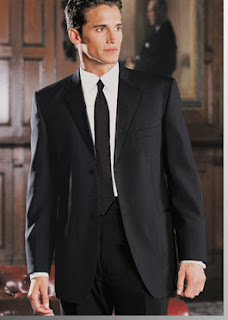
The second scene: Shifty criminal.
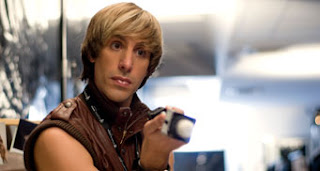
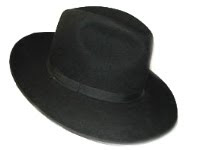
This scene consists of a 15 second shot of a shifty man leaving a building. To create the mysterious effect via costume we are planning to use a big coat and dark clothes. We may possible include a hat for him to pull down as he leaves on just use the big coat for him to pull across and do up as he walks away. So, this actor will wear black shoes, black trousers, a big coat and a dark t-shirt.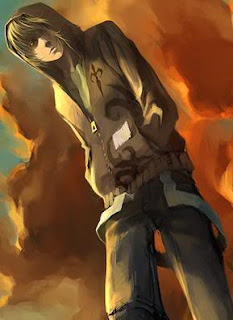
The first scene: News Report.
We, as a group, were advised to use a more mature looking actor in the role of news reporter to make it appear more legitimate and realistic but we realise this may be hard to organise. To combat this we are planning to act ourselves and use a suit to not only make us appear older than we actually are but also to comply with the stereotypical dress code of British Television Journalists. A black or Grey suit with tie, coupled with a microphone and piece of paper will leave the audience believing that this news reporter is a seasoned professional.
The second scene: Shifty criminal.
This scene consists of a 15 second shot of a shifty man leaving a building. To create the mysterious effect via costume we are planning to use a big coat and dark clothes. We may possible include a hat for him to pull down as he leaves on just use the big coat for him to pull across and do up as he walks away. So, this actor will wear black shoes, black trousers, a big coat and a dark t-shirt.
Analysis of examples of political, psychological, action and crime thrillers
There are four main sub-genres used within the thriller genre. There are of course others but the main ones that are used are: Political, psychological, action and crime thrillers.
- A political thriller is a thriller that is set against the backdrop of political power struggle. They usually involve various plots, designed to give political power to someone, while his opponents try to stop him from getting it. They can involve national or international political plots. An example is the film, Munich.
- An Action thriller can be defined, In which the work often features a race against the clock, contains lots of violence, and an obvious antagonist (which is can be known as the "bad guy") . These films usually contain large amounts of guns, explosions, and a large set for the action to take place. These films often have elements of mystery and crime which contributes to making a sub-genre of action and a thriller. An example of this genre is, The Bourne Trilogy.
- A Psychological thriller can be defined as; the conflict between the main characters is ether mental or emotional, rather than physical. A good example of this type of thriller could be the film Fatal attraction, as it shows there are emotional issues between the characters.
- A Crime thriller is a hybrid of both crime films and thrillers, that follow a successful or failed crime and what happens after it. Crime thrillers normally focus on action rather than psycological, and can be linked to action thrillers. Examples of these can be : Inside man, Seven or Reservoir dogs.
The titles that will be included in our sequence
We intend to include titles and the beginning of our opening, to introduce the people involved with the making of this sequence. The titles will appear as the first section of the sequence starts, dissolving onto the black background and then dissolving out aswell. The titles will consist of all the different jobs that helped to make the film, which include: Production company, Actors in the film, editors, sound producers and director of the sequence. The titles are intended to appear in that order listed above, which will come in one after the other.
The names of the people involved are intended to appear underneath the titles, except from the actors their names will just appear with no title. Researching into different opening sequences, the majority of them have their titles at the beginning with parts or their narrative in the background, with the titles flowing continuously.
I found this by looking at the website : http://www.artofthetitle.com/ , which had examples such as Sherlock Holmes, that used newspapers and articles to add effect to their titles. Also i saw an example of the film Snake Eyes, which used actual footage of the film, not using a separate scene to show the titles. We decided to use the method of using a separate scene for out title sequence, to keep the effect of mystery and suspense as we don't want to reveal much of the narrative of what could be the film itself, as a real production most probably wouldn't do.
The names of the people involved are intended to appear underneath the titles, except from the actors their names will just appear with no title. Researching into different opening sequences, the majority of them have their titles at the beginning with parts or their narrative in the background, with the titles flowing continuously.
I found this by looking at the website : http://www.artofthetitle.com/ , which had examples such as Sherlock Holmes, that used newspapers and articles to add effect to their titles. Also i saw an example of the film Snake Eyes, which used actual footage of the film, not using a separate scene to show the titles. We decided to use the method of using a separate scene for out title sequence, to keep the effect of mystery and suspense as we don't want to reveal much of the narrative of what could be the film itself, as a real production most probably wouldn't do.
Wednesday, 27 January 2010
the check list.
- tick each bullet point of as we do it. boys, when you read this if there is anything wrong stick it in at the bottom and we will rectify it next lesson. this plan is extremely detailed because it lists every single thing we need to do, meaning that when it comes to doing it we can literally just check of a list
- We are going to split our opening sequence into three parts: the phone conversation and the collage of information about the murder and the music
- the phone conversation
- script a phone conversation, make it around 30 seconds long, start with a ring tone, ring twice, pick up talk for 25 seconds then the dead phone line as one person cuts off. DONE
- record the phone conversation, then upload to mac.
- when uploaded onto the final cut put the conversation on top of a black screen, experiment with using credits above the call, all credits fade in and out as it is a mysterious thriller, no definite sharp movements
- transition - as the phone beeps for 5 seconds as the other person has hung up quiet music will move in and take over from the sound of the phone
- Without a change of background (the black background stays there adding continuity) the media starts to fly in.
- we will use my camera (callums) to take photos of the location... the mitre, lots of photos around the 'crime scene' use somewhere that doesnt have people inside (obviously not an active crimescene) i will upload these to my home computer and send them in to school where we will upload to photoshop and edit these to make them darker and more brownish (as though they belong to a newspaper) finally upload to finalcut
- Make newspaper reports (use real newspaper titles so we can mirror the newspaper saves inventing a whole template ourselves), front page accounts of the murder, and subtitle will detail the accused, someone in power, a minister etc. make these at home , 1 each, then make the screen full screen, take a screen print, and send in to school. upload these to photoshop then later put in to final cut.
- Use oli's sony HD camera to film two scenes: (firstly chek compatibility with media crew)
- the first is a newspaper report from the crime scene, use someone in a suit that looks mature. script his 15 second shot he will show the crime scene give basic background info... 'we have no confirmed information on what went on the house , we do know however a murder took place throughout the night of the 24th'... (along them lines) he will say who died and the witness that saw someone leaving the building. the camera angle will be held steady by one of us just as a film crew would at a crime scene. upload this short simple precise clip to final cut and attempt to layer 'bbc news' and 'date and time' to the shot to create the look of a proper bbc news report... use andrea to help with this.
- the second clip that needs filming is that of the action shot. this clip will be around 15 seconds (the reason for having 2 short bursts is because they are merely film clips as part of a bigger collage, we need to keep changing the media to keep the audience on their toes, the first long bit of filming will be the start of the actual film, that is what distinguishes the title sequence from film) the clip will be of a creepy man, preferably in dark clothes... keeping with the thriller mise en scene stereotypes and possibly a big coat. he will step out of a door of a house, look straight down the lens of the camera and walk away pulling on a hat or pulling his coat closed, looking secretive. by adding in this secondary scene it allows us to fit in with the criteria of 'video' by having different angles and distances. the framing will consist of the crime scene in the background for the news report and the a wierd back passage for the secondary clip)
- by not including any media that the public would not see normally (the murder weapon, the crime scene with the chalk around the body etc) the audience will have the exact view as they would if it happened in real life, and things will slowly be revealed to them through the actual film.
the music
- the music will exist in the background and will start quietly from the phone conversation and get louder and louder ending with an orchestrated score. the production of the music will be done after filming and take around 1-2 lessons as another person edits the clips.
the editing
- once we have everything placed in order on final cut we will then get down to intricate details, layering the media (photos and videos) on top of each other to creat a collage effect and then tying that in with the phone conversation.
- finally we will layer the music
- this will hopefully be completed by the first draft deadline, andrea will then check the project and give us room for improvement.
if we get time we will create our film company logo in lesson rather than outside of lesson
if this goes to plan we will be left with a quality project boys...
Music note - We need to make sure music is not a last minute thing as music plays a big role in increasing suspense and tention, portraying feelings of the actor to the audience. ensure music fits to the scene, if neccesary. #
Possible narration idea - framed guy narrating, only suggestion.
ensure the tranitions are not tacky!
video criteria
The basics to include in our opening:
- Holding a shot steady
- Framing a shot
- using a variety of shot distances
- shooting material to the task set
- selecting mise en scene including: colour, figure, lighting, objects and setting
- editing so that meaning is apparent to the viewer
- using varied shot transitions and other effects.
- using sound with images and editing it appropriately
- using titles appropriately
Subscribe to:
Posts (Atom)